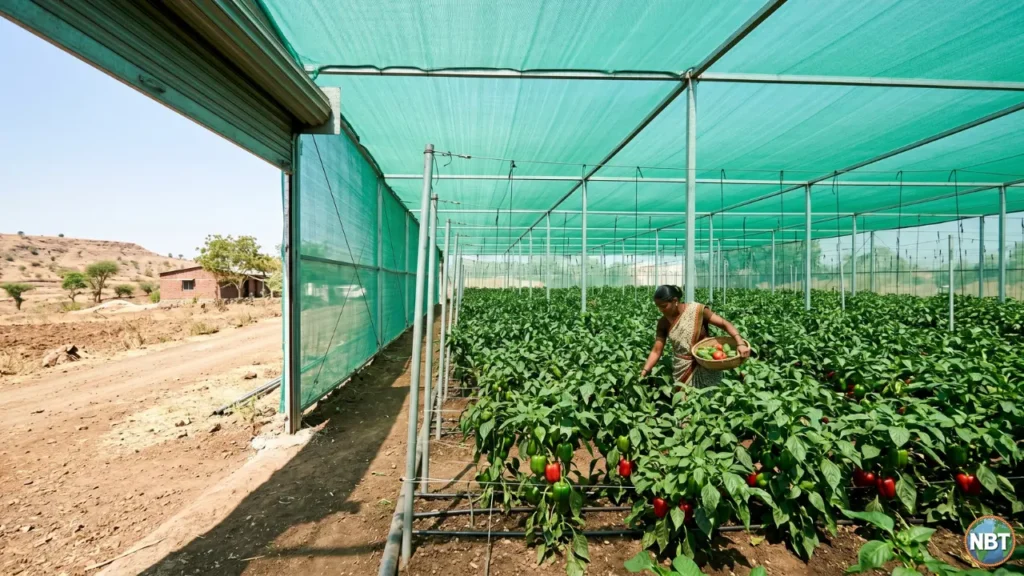
Ask any farmer in India about their biggest enemy, and they won’t just say “pests” or “low prices.” They’ll point to the sky. Our summers are getting harsher, the heat is becoming unbearable, and even the “controlled” environment of a greenhouse can turn into an oven if you aren’t careful. I’ve seen many hardworking brothers invest lakhs into a greenhouse structure, only to see their capsicum or high-value flowers wilt away because the internal temperature hit 45°C.
A greenhouse without the right net is just a glass or plastic box that traps heat. You think you’re protecting your plants, but you might actually be cooking them. If your plants look tired by 2 PM every day, or if you’re spending a fortune on water just to keep them from drooping, it’s time we talk about the one thing many farmers ignore until it’s too late: the Greenhouse Net.
It’s Not Just a Cloth; It’s a Shield
When we talk about greenhouse nets, or “shade nets,” many people think any green mesh from the local market will do. That is a massive mistake. Think of it like this: would you wear a heavy wool sweater in the middle of a May afternoon in Rajasthan? Of course not. Different crops need different “clothes.”
A greenhouse net is a specially engineered fabric, usually made from high-density polyethylene. Its job isn’t just to make things look green. It’s there to manage the four pillars of a healthy crop: sunlight, temperature, humidity, and wind. By filtering the harsh UV rays, it prevents “sunburn” on your vegetables—yes, plants get sunburnt too—and creates a micro-climate where the plant feels comfortable enough to grow, rather than just trying to survive the heat.
Finding the Right Fit for Your Farm
Choosing a net isn’t a “one size fits all” game. You have to look at what you are growing. If you are growing leafy greens, you need a different shading percentage than if you are growing tomatoes. The “shading percentage” tells you how much light the net blocks. A 50% net lets in half the sunlight, while a 75% net is much darker.
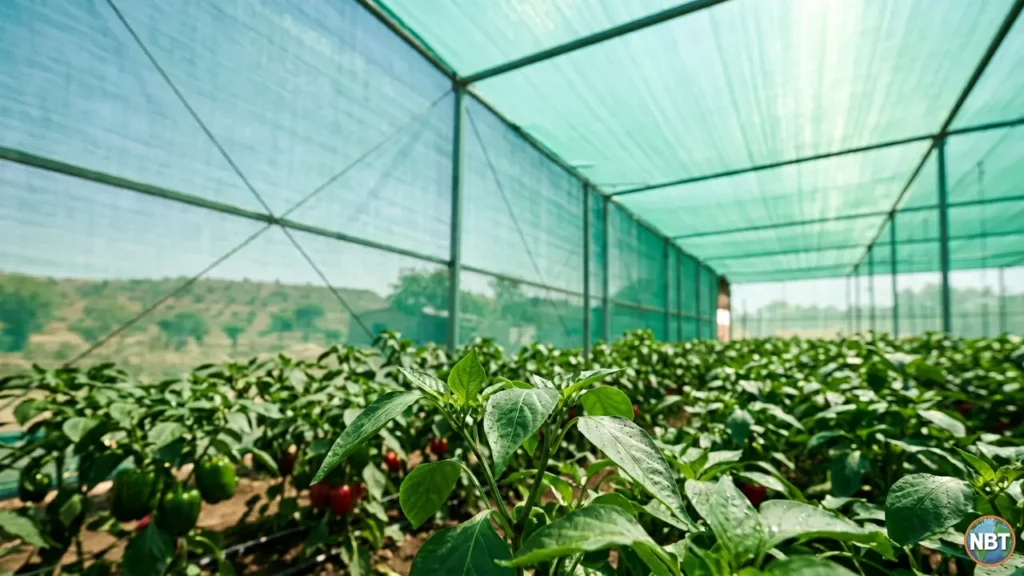
This is where NBT Ropes comes into the picture. Instead of those cheap nets that tear at the first sign of a monsoon wind, their greenhouse nets are built for the long haul. When you use a high-quality net from a specialized maker like NBT, you aren’t just buying shade; you are buying a tool that regulates the “breath” of your greenhouse. It allows enough airflow so that humidity doesn’t build up and cause fungal diseases, but it’s tight enough to keep out those pesky whiteflies and thrips that can ruin a whole season’s work in a week.
How to Set It Up Properly
Don’t just throw the net over the frame and tie it with any old string. The way you install it determines how long it lasts.
- Check the Weight: A good net should be lightweight so it doesn’t put unnecessary pressure on your poles, but it must be strong.
- UV Stabilization: This is the most important part. The Indian sun is brutal. If your net isn’t UV stabilized (like the ones from NBT), the plastic will become brittle and start “shedding” or tearing within six months.
- Tension is Key: If the net is too loose, it will flap in the wind and rub against the frame, which causes holes. If it’s too tight, it might tear at the eyelets. It should be firm, like a well-tied turban.
The Hidden Benefits You’ll Notice in Your Pocket
Most farmers look at a net as an expense. I want you to look at it as a savings account.
First, let’s talk about water. In a covered greenhouse with a proper shade net, evaporation is much lower. You’ll find yourself running your drip system for less time because the soil stays moist longer.
Second, think about pesticides. A good insect net acts as a physical wall. If the bugs can’t get in, you don’t need to spray as much. Not only does this save you money on expensive chemicals, but your produce is also “cleaner,” which fetches a better price in the premium markets or for export.
Finally, there’s diversification. With a controlled environment, you aren’t limited by the “season.” You can grow off-season vegetables when the market prices are high, because your NBT net is creating a “fake winter” or a “cool monsoon” inside, even if it’s scorching outside.
Mistakes That Will Cost You Your Harvest
I’ve seen this happen too often: a farmer buys a cheap, non-branded net from a local hardware shop because it saved him a few thousand rupees. Three months later, the net has changed color, it’s sagging, and the “shading” is uneven. This creates “hot spots” in the greenhouse. Half your plants grow well, and the other half die.
Another big mistake? Ignoring chemical resistance. If you use sulfur or chlorine-based sprays in your greenhouse, cheap nets will dissolve or weaken chemically. You need a net that is resistant to these elements. Don’t be penny-wise and pound-foolish. A bad net is worse than no net at all, because it gives you a false sense of security while your crops suffer.
Practical Tips for the Long Run
- Cleaning: Dust settles on the net over time, which can block too much light. Every few months, give it a light wash with water (no harsh chemicals!) to keep the light transmission steady.
- Storage: If you use seasonal nets, make sure they are bone-dry before you fold and store them. Damp nets lead to mold.
- Repair immediately: If a small hole appears (maybe from a falling branch), fix it immediately. A small hole is an invitation for a million insects.
The Economic Reality
Let’s be blunt. Farming is a business. If your input costs go up and your yield stays the same, you’re losing. A high-quality greenhouse net increases your “Grade A” produce. Instead of 60% of your crop being top-quality, you can push that to 90%. When you go to the Mandi with uniform, unblemished, healthy produce, you are the one who dictates the price.
Final Word: Take a Stand for Quality
The weather in India isn’t going to get any kinder. Relying on luck isn’t a strategy; relying on the right technology is. Stop treating your greenhouse like a temporary shed. Invest in a high-quality net from a trusted name like NBT Ropes. It’s the difference between struggling to survive the summer and thriving through it. Your plants can’t tell you they are uncomfortable—they just die. Be their voice and give them the protection they deserve.
FAQs
Not really. While a 50% shade net is a good “middle ground” for many Indian vegetables like tomatoes or chilies, sensitive crops like orchids or certain leafy greens might need 75% shade. Always check the light requirement of your specific seed variety before buying.
If you buy a UV-stabilized net from a reputable brand like NBT Ropes, you should easily get 3 to 5 years of life out of it, even in harsh Indian weather. Cheap, non-stabilized nets often fail within one year.
Yes, it does. Green is common because it mimics natural light filtering, but white nets are often used to reflect heat while letting in maximum light. Black nets are great for heat absorption. For most general purposes in India, green or green-black combinations work best.
A standard shade net will break the force of heavy rain, turning it into a fine mist which is better for plants. However, for heavy hail, you specifically need “anti-hail” nets which are knitted differently to withstand the impact of ice stones.
It’s not “hard,” but it requires precision. You need to ensure the structure is smooth so it doesn’t snag the fabric. Most farmers can do it with 2-3 helpers, but following a proper guide or video from the manufacturer is highly recommended to avoid sagging.
It can if there is no ventilation. The key is to choose a net with the right weave density. A quality net allows “micro-ventilation,” meaning air can still pass through while the heat is kept out.
Protect Your Harvest with NBT Ropes
When it comes to safeguarding your hard work, don’t settle for anything less than the best. NBT Ropes provides premium-grade Greenhouse and Shade Nets designed specifically for the challenging Indian climate.
- UV Stabilized: Built to withstand years of direct, harsh sunlight.
- Chemical Resistant: Durable against common agricultural sprays (Sulfur/Chlorine).
- Custom Shading: Available in various percentages to suit your specific crop needs.
- High Strength: Lightweight yet tear-resistant for maximum longevity.
Ready to upgrade your farm? Visit NBT Ropes to explore our Greenhouse Solutions
-
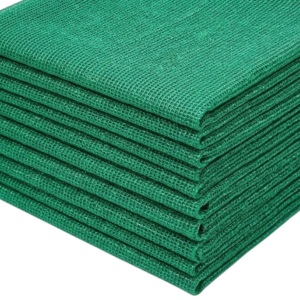
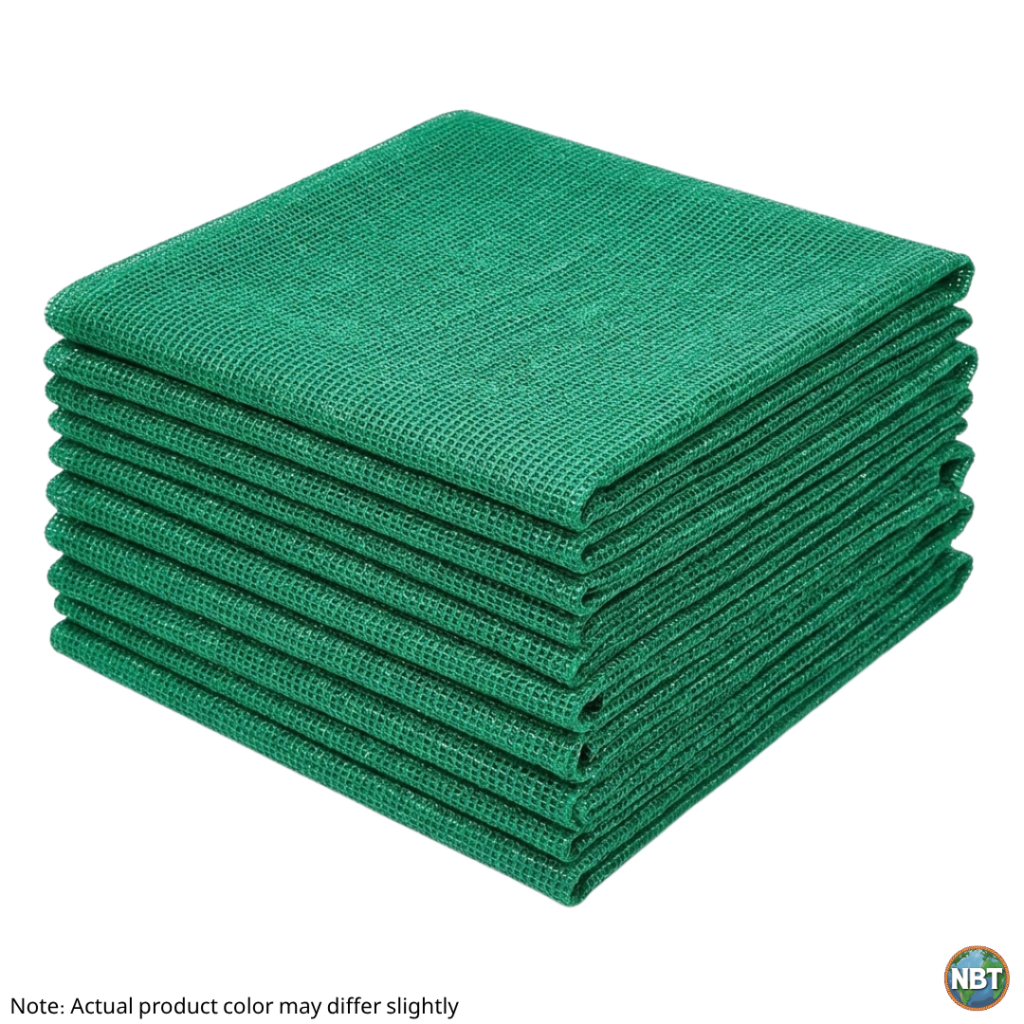
Multipurpose Green Shade Net with 50%, 75%, and 90% UV Protection Option for Garden, Green House, Balcony & Multipurpose Agro – Available in 5ft and 10ft sizes
Price range: ₹1,000.00 through ₹7,000.00 Select options This product has multiple variants. The options may be chosen on the product page